
Sibanye: highly presentable

One of the things I really like about Sibanye-Stillwater is that the company keeps investors informed about the operations and the strategy. There are regular, detailed presentations made available to investors.

There are two presentations that have been made available in the past week. Sibanye attended the Bank of America Sun City Conference and us plebs who didn’t crack an invite can at least read the presentations.

You’ll find a useful presentation here (company overview) and the Sun City Conference presentation here (SA PGM operations) if you want to read the entire things.

In this article, I’ll pull out some of the most interesting facts about the company.

The company categorises its operations into SA Platinum Group Metals (PGM), US PGM, SA Gold, Battery Metals and Circular Economy Operations (tailings operations like the controlling stake in DRDGOLD). The acquisition strategy is focused on battery or green metals, like lithium and nickel, as part of preparing Sibanye for future demand.

Sibanye has made a name for itself through risky but ultimately highly rewarding acquisitions. When nobody wanted to touch platinum businesses a few years ago, Sibanye ran around mopping them up. R44.4 billion was invested over a three-year period. Net of capex, the cumulative adjusted EBITDA contribution from the investments is R90.1 billion. The payback on investment is thus just over 2x in a matter of a few years. Lonmin is particularly incredible, with a 6x payback achieved over just two years.

Capital allocation is the name of the game in this industry (as it should be in all industries). Off the back of record profits, Sibanye reduced and refinanced debt to reduce the interest burden. In 2021, Sibanye bought back 5% of shares in issue and the dividend yield was 9.8%.

The Sun City Conference focused on the PGM operations, perhaps because the resort sits at the heart of the local industry near Rustenburg. We’ve already discussed that Sibanye achieved great payback returns on recent acquisitions. If you focus on just the SA PGM operations, the total investment was R18.2 billion and the payback is 4.96x since 2016.

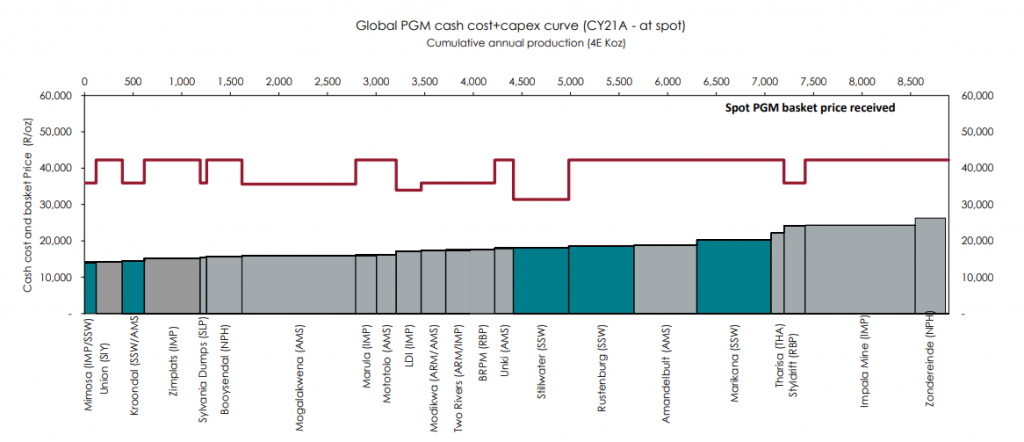
The focus in mining (once capital has been allocated) is to move down the cost curve. For various reasons, different platinum mines have different cash costs to get the platinum (and related metals) out of the ground. Here’s the chart from the presentation to give you some idea of how this works:
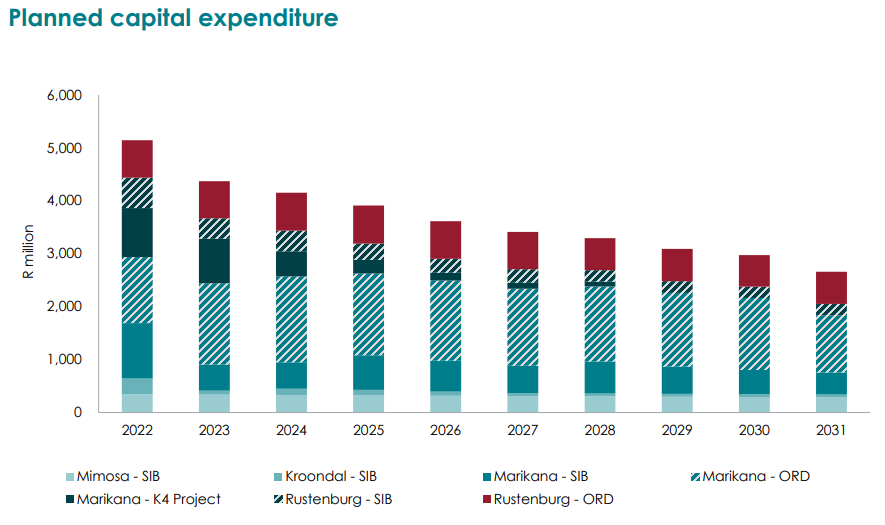
Another important chart is planned capital expenditure, which is expected to decrease in the PGM business over the next decade:
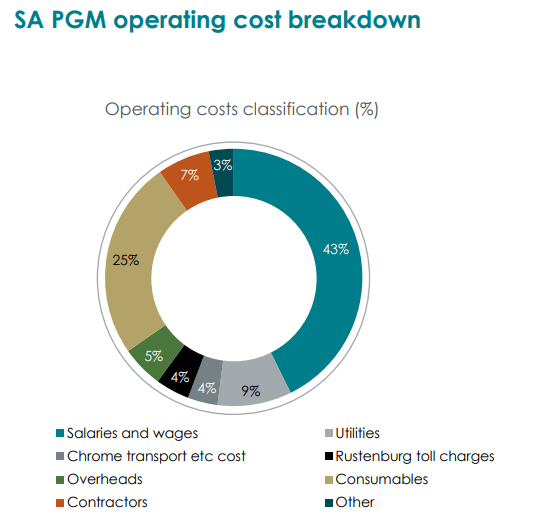
I’ve pulled one more chart to increase your curiosity about this industry. Salaries and wages are 43% of operating costs, which is why Sibanye (and other mines) are so sensitive to wage demands in the industry:
If you want to learn more about the company and the sector, I highly recommend flicking through the presentations that I gave you the links to earlier.

Disclaimer: the author holds shares in Sibanye-Stillwater

Leave a reply

Please enter your comment!
Please enter your name here

Latest Articles

Boring business billions

The world’s richest people aren’t always building apps or chasing disruption. Here are three stories that reveal how unglamorous industries keep minting billionaires. From billboards to pig farming and car mats, there are many ways to make it big.

Ghost Bites (AB InBev | Jubilee Metals | HCI | Schroder European Real Estate)

With all the news from the first week of January 2026 included in one Ghost Bites, you'll find deal news at AB InBev, Jubilee Metals and HCI. There's also a valuation update at Schroder European Real Estate.

Why ETFs Play a Vital Role in Private Markets

Exchange Traded Funds (ETFs) have emerged as a transformative solution, for public markets and also as a strategic bridge to private market exposure. The border between traditional and alternative asset management is dissolving. Clients are driving the convergence, seeking integrated solutions that blend public and private exposures. Duma Mxenge of Satrix explains.

Ghost Bites (AfroCentric | Aspen | Novus – Mustek)

Aspen announced the disposal of Aspen APAC and the market loved it. AfroCentric is disposing of Activo and the market forgot to notice - for now, at least. And for Novus, a purchase of 3,000 shares has turned out to be very expensive in the Mustek deal.

UNLOCK THE STOCK: Southern Sun

In the 65th edition of Unlock the Stock, Southern Sun joined the platform to talk about the recent numbers and the strategic outlook for the business.

Ghost Bites (Mr Price | NEPI Rockcastle)

Mr Price isn't backing off on the NKD deal, despite the absolute hatred for the transaction from the market. NEPI's pre-close update shows the importance of looking at per-share growth.

Sponsored

Ghost Stories #89: 25 years of Satrix – how indexation changed investing in South Africa

In the year 2000, a lot happened. There was some questionable pop music. There was also the Dot-Com Crisis, followed by a period that saw incredible equity returns in South Africa until the Global Financial Crisis hit in 2007/2008. And during that important period in our local market, we also saw the emergence and initial growth of ETFs in South Africa, spearheaded by Satrix. To reflect on 25 years of ETFs in South Africa, René Basson joined me to share the important milestones and fascinating stories that defined this journey. Join us as we look back on how Satrix made it possible for everyone to own the market.

The Finance Ghost Plugged in with Capitec: Ep 6 (Noodles without borders – bringing miso to Mzansi)

Lu-ise Hattingh and Ruan Botha are a great example of the power and value of travel. After spending time in Japan, they fell in love with the culture and food. As all great entrepreneurs do, they also took the opportunity to learn about the Japanese approach to consumer brands. That curiosity eventually sparked a business idea they brought back home. Today, Lu-ise and Ruan are rolling out Market Kokoro franchise stores in South Africa.

Ghost Stories #88: Cell C – more than just an MVNO engine

Cell C has been on quite the adventure in its efforts to carve out a sustainable competitive position. Cell C has created a profitable business model that goes well beyond the MVNO operations that the market tends to focus on. In this podcast, CEO Jorge Mendes joined me to explain Cell C's business and how they plan to win across key verticals.

Ghost Stories #87: Lessons from 2025 – discipline over drama

As we look back on a fascinating year in the markets, Nico Katzke (Head of Portfolio Solutions at Satrix) delivered a fantastic mix of insights on this podcast that can be applied to your strategy in 2026 and beyond. From being careful not to learn the wrong lessons through to choosing simplicity over complexity, there's a lot of great stuff in here to get you ready for another year in the markets.